
A parent and child reading a book together at home

Creating a Heritage Language Reading Routine at Home

A heritage language reading routine can give a family regular time to enjoy words, stories, and conversation together. It does not need to resemble a formal lesson or depend on fluent reading. The most useful starting point is a short activity that fits the household’s schedule and makes the language feel connected to everyday life rather than to constant correction.

Choose a small and comfortable starting point

Select material that matches the reader’s current ability and interests. A picture book, a short poem, a familiar recipe, or a few lines from a family letter may offer a better beginning than a long book. Ask the child or younger reader to choose between two options so they have a role in the routine.

Set aside a predictable period that is easy to repeat. Ten quiet minutes after a meal may be more practical than an ambitious weekend session. Keep books or printed pages nearby and agree that a busy day can have a shorter version. Consistency should support the family rather than create another source of pressure.

Decide how to share the reading. An adult can read aloud while a child looks at pictures, or participants can alternate sentences. Someone who is not confident with pronunciation can listen to a trusted recording and follow the text. Explain that asking for help is part of reading, not evidence of failure.

Build conversation around the text

Pause to discuss a word that connects with something familiar. A story about a market might lead to the names of foods the family buys. A description of a home might connect with an older relative’s memories. Keep the discussion brief enough that the story still has momentum.

Avoid correcting every sound immediately. Choose one useful word or phrase to practice after reading, and model it patiently. Families may use different regional forms or expressions. Note these differences without presenting one relative’s everyday speech as a mistake. When unsure about a word, consult an appropriate dictionary or language resource together.

Let readers respond in the language they can manage. They might describe a picture, draw a scene, ask a question, or explain the story using more than one language. The goal of the activity should be clear: enjoying the text and building familiarity, with additional skills developing through practice.

Keep a simple record of what the family enjoyed. Revisit favorite pages and invite relatives to suggest material. If an activity consistently causes frustration, make it shorter or choose something easier. A routine is more likely to continue when the people involved feel comfortable returning to it.
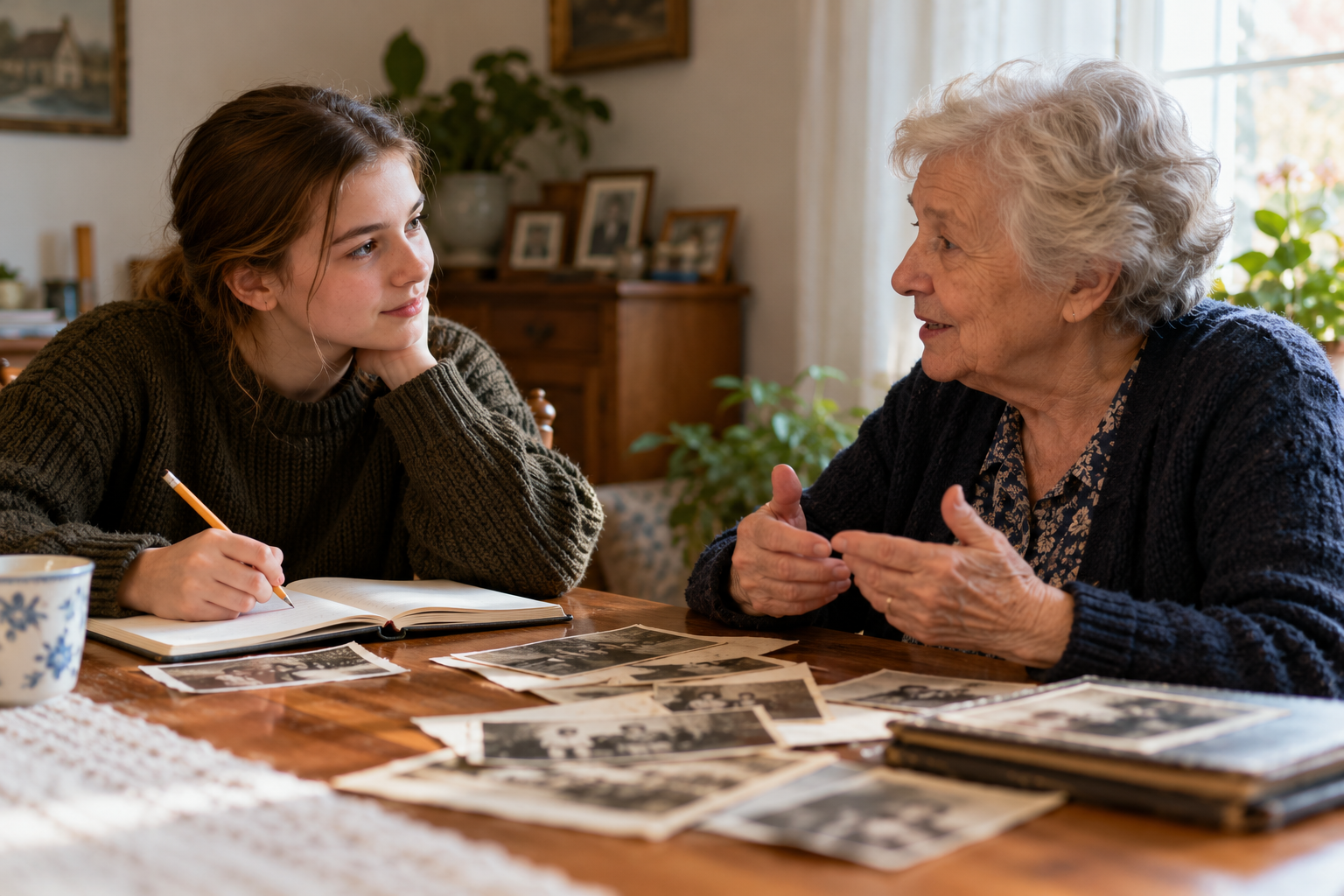
A young person interviewing an older relative with a notebook

Helping Young People Interview Older Relatives

An interview with an older relative can turn family history into a shared learning project. Young people practice listening, asking questions, and organizing information while discovering experiences beyond their own. The conversation works best when it feels like an invitation to remember, with room to pause or change direction, rather than an assignment that must produce a dramatic story.

Prepare questions that invite detail

Agree on a manageable topic before the interview. A school day, a first job, a family celebration, or a familiar street may be easier to discuss than an entire lifetime. Ask the relative what they would enjoy talking about and how long they would like the conversation to last.

Help the young interviewer prepare a few open questions. What did the room look like? Who was usually there? What happened on an ordinary afternoon? Concrete prompts can encourage detail without suggesting a particular answer. Avoid beginning with questions that assume hardship, migration, or conflict. Those subjects should be introduced only when the speaker is comfortable discussing them.

Explain recording choices in advance. A notebook may be enough, or the relative may agree to an audio recording. Ask separately about keeping the recording, sharing it with family, and using it in a school project. Permission for a conversation does not automatically include permission to publish it online.

Turn listening into careful work

During the interview, leave time for answers and resist correcting every small detail. Follow up gently when something is unclear. If a date is uncertain, record that uncertainty instead of inventing an exact year. The interviewer can return to the question later or compare the memory with a document, if the relative agrees.

Encourage breaks and accept topics the speaker prefers to avoid. A useful interview does not depend on collecting painful memories. Ordinary details about meals, games, work, or neighborhood routines can be valuable in their own right. Young people should know that a respectful conversation includes the right not to answer.

Afterward, organize notes into a short account with a beginning, a few connected details, and a closing reflection. Separate direct quotations from summaries. Label photographs with the information available and leave unknown names or dates clearly marked. Do not describe a memory as a verified fact simply because it was told confidently.

Let the relative review the finished work before it is shared. Invite corrections and remove material they do not want included. Thank them for their time and explain what the young person learned. The strongest outcome is both a useful record and a conversation that makes another conversation possible.