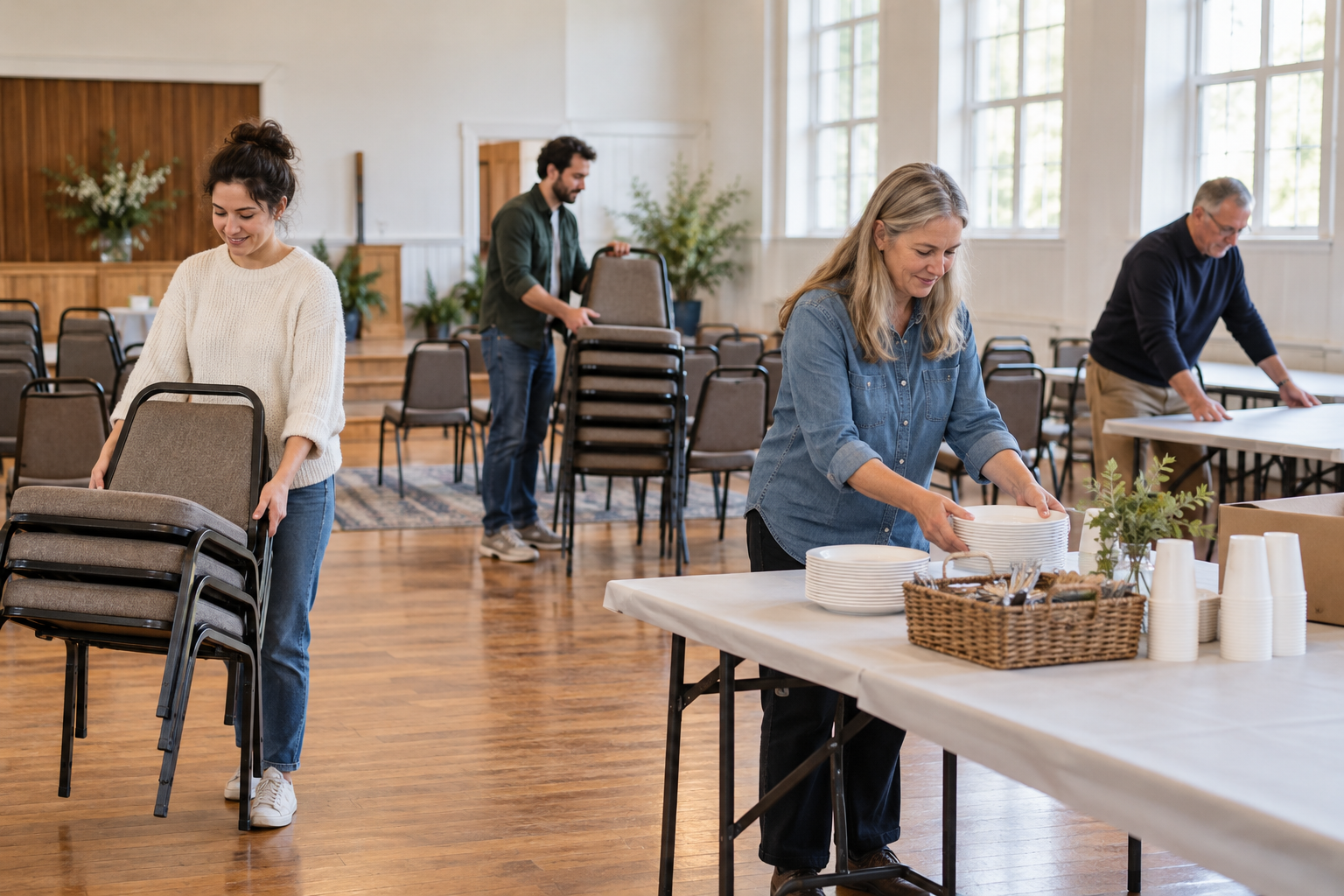
Volunteers preparing chairs and supplies in a community hall

Building a Volunteer Team That Can Keep Going

Community projects often begin with enthusiasm and a small group willing to help. Keeping them going requires more than finding people for the first event. Volunteers need clear responsibilities, realistic commitments, and a way to raise concerns before tiredness becomes frustration. A modest project with dependable support can serve a community better than an ambitious schedule nobody can sustain.

Define a useful and manageable role

Begin with the work itself. Instead of asking for general help, describe a specific task: greeting visitors for one hour, preparing a room, checking a translation, or organizing supplies. Explain who provides guidance and what a successful result looks like. People can make a better decision when they understand the commitment.

Ask volunteers about availability without assuming that free time is unlimited. Work schedules, family responsibilities, transportation, and study all affect participation. Offer different ways to contribute, including occasional tasks and preparation that can happen at home. A person who cannot attend every meeting may still have valuable experience.

Pair new volunteers with someone familiar with the activity. A short written checklist helps both people remember essential steps and reduces dependence on one organizer. Include practical details such as where supplies belong, whom to contact when something goes wrong, and which decisions require approval. Keep personal information available only to people who need it.

Make continuity part of the routine

Use a shared schedule that shows responsibilities clearly, and confirm changes directly with the people affected. Avoid treating silence in a group chat as agreement. Give volunteers enough notice to plan, and make it acceptable to decline a task. Predictability builds trust more effectively than repeated urgent requests.

After an activity, hold a brief review. Ask what worked, what caused confusion, and what should change next time. Focus on the process rather than blaming individuals. Record useful improvements in the checklist so the next team does not have to solve the same problem again.

Appreciation should be specific. Thank someone for the welcome they offered, the careful preparation they completed, or the extra patience they showed. Ask before sharing a volunteer’s photograph or personal story publicly. Recognition should feel comfortable to the person receiving it.

Plan for absences and departures from the beginning. Store instructions where authorized organizers can find them, identify a backup for essential tasks, and hand over responsibilities gradually. When someone leaves, thank them without making them feel guilty. A volunteer team lasts when helping remains a meaningful choice, supported by clear organization and reasonable expectations.

A host welcoming two newcomers to a community gathering

Making a Community Gathering Welcoming to Newcomers

A community gathering can feel familiar to regular visitors and confusing to someone arriving for the first time. People may know each other, share a language, or understand customs that nobody explains aloud. A welcoming event makes those unwritten details easier to understand without asking newcomers to reveal personal information or prove that they belong.

Explain the visit before it begins

Start with an invitation that answers practical questions. Give the date, starting and finishing times, address, entrance instructions, and the name of someone who can answer questions. Explain whether the gathering includes a meal, a discussion, a cultural activity, or a religious service. Visitors should know what they are being invited to attend.

Avoid assuming that everyone drives or can manage stairs. Describe available access information accurately and invite people to ask about their needs privately. If refreshments are offered, list ingredients where possible. A simple explanation of cost, registration, and whether children are welcome can remove uncertainty before it becomes a reason to stay home.

Choose a greeting team rather than leaving hospitality to chance. One person can explain the schedule, another can introduce visitors to a small group, and someone else can help families find a suitable place to sit. Introductions work best when they give people a choice. Some visitors enjoy conversation immediately; others prefer to observe.

Create space for different experiences

Use clear language during announcements. If more than one language is spoken, explain how interpretation or short summaries will work. Do not expect a child or an unprepared guest to translate a sensitive conversation. Sharing a brief written schedule can help people follow the event even when their language skills differ.

Plan at least one activity that does not depend on existing friendships. A shared craft, a conversation about a photograph, or a small practical task gives participants something concrete to do together. Avoid public questions about migration history, finances, or family circumstances. People should decide for themselves what they want to share.

At the end, offer a straightforward way to stay informed. Ask permission before adding anyone to a mailing list or group chat, and explain how often messages are sent. Thank volunteers and visitors alike. A short follow-up question, such as whether the directions were clear, can reveal improvements that organizers might otherwise miss.

Hospitality grows through consistent small actions. Clear information, patient introductions, and respect for privacy help turn a first visit into an experience people may choose to repeat.