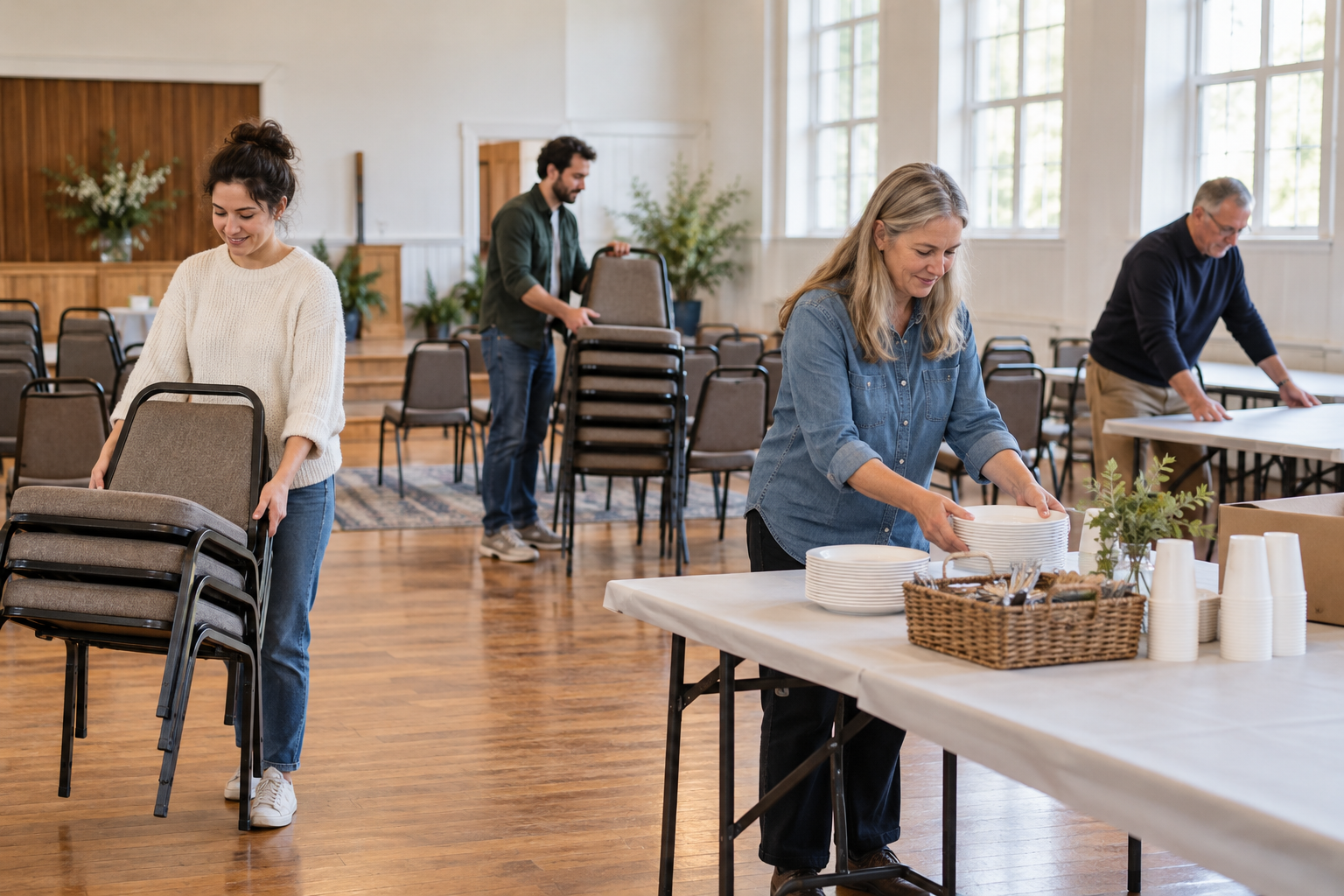
Community projects often begin with enthusiasm and a small group willing to help. Keeping them going requires more than finding people for the first event. Volunteers need clear responsibilities, realistic commitments, and a way to raise concerns before tiredness becomes frustration. A modest project with dependable support can serve a community better than an ambitious schedule nobody can sustain.
Define a useful and manageable role
Begin with the work itself. Instead of asking for general help, describe a specific task: greeting visitors for one hour, preparing a room, checking a translation, or organizing supplies. Explain who provides guidance and what a successful result looks like. People can make a better decision when they understand the commitment.
Ask volunteers about availability without assuming that free time is unlimited. Work schedules, family responsibilities, transportation, and study all affect participation. Offer different ways to contribute, including occasional tasks and preparation that can happen at home. A person who cannot attend every meeting may still have valuable experience.
Pair new volunteers with someone familiar with the activity. A short written checklist helps both people remember essential steps and reduces dependence on one organizer. Include practical details such as where supplies belong, whom to contact when something goes wrong, and which decisions require approval. Keep personal information available only to people who need it.
Make continuity part of the routine
Use a shared schedule that shows responsibilities clearly, and confirm changes directly with the people affected. Avoid treating silence in a group chat as agreement. Give volunteers enough notice to plan, and make it acceptable to decline a task. Predictability builds trust more effectively than repeated urgent requests.
After an activity, hold a brief review. Ask what worked, what caused confusion, and what should change next time. Focus on the process rather than blaming individuals. Record useful improvements in the checklist so the next team does not have to solve the same problem again.
Appreciation should be specific. Thank someone for the welcome they offered, the careful preparation they completed, or the extra patience they showed. Ask before sharing a volunteer’s photograph or personal story publicly. Recognition should feel comfortable to the person receiving it.
Plan for absences and departures from the beginning. Store instructions where authorized organizers can find them, identify a backup for essential tasks, and hand over responsibilities gradually. When someone leaves, thank them without making them feel guilty. A volunteer team lasts when helping remains a meaningful choice, supported by clear organization and reasonable expectations.