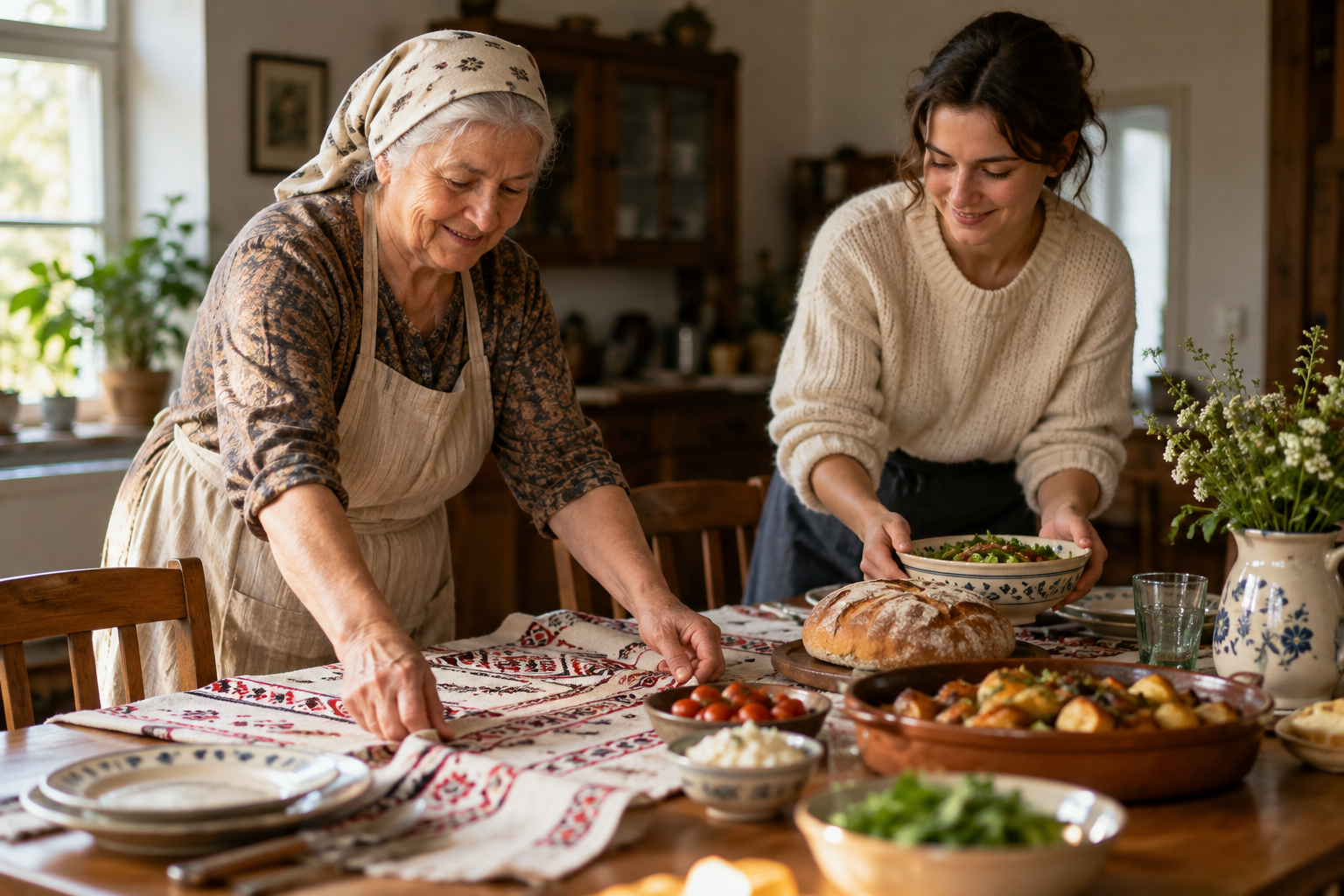
Family traditions can offer a sense of connection across generations. A familiar meal, a song, a holiday visit, or a moment of reflection may carry memories that are difficult to explain in a few words. Yet a custom can lose its warmth when younger relatives feel that participating is a test of loyalty. Sharing the meaning behind a tradition creates more room for curiosity.
Begin with a personal story
Choose one custom and describe how you experienced it. Explain who taught you, what the family did, and which detail you remember most clearly. Personal accounts help listeners understand why something matters without suggesting that every family follows exactly the same practice. Different households may attach different meanings to similar activities.
Separate your own memories from broader claims. Saying that your grandparents prepared a particular dish is more precise than saying that everyone from a country or faith prepares it. If a child asks a question you cannot answer, acknowledge the gap and explore it together. Uncertainty can open a conversation rather than weaken it.
Invite participation through a small task. A younger family member might choose music, help set the table, write a recipe, or ask an older relative about a photograph. Offer choices appropriate to their interests and abilities. Someone who prefers listening should not be forced to perform or explain a practice in front of others.
Leave room for change and difference
Discuss which parts of a custom are meaningful to your family and which are practical details. A gathering may need a different time because relatives work late, or a recipe may need adjustments for ingredients and dietary needs. Explain such changes openly instead of treating every adjustment as a loss.
Respect differences in belief and comfort. Some relatives may approach a tradition as a religious practice, while others connect with its cultural or family meaning. Avoid asking someone to pretend to hold a belief. Clear invitations help people understand what participation involves and decide how they wish to take part.
Create a record only with permission. Ask before recording conversations, photographing a private gathering, or sharing a story online. Let relatives decide whether their names or words should be included. A private family notebook may be more suitable than a public post.
End with an open question: which part would they like to repeat, learn more about, or change? Their answer may reveal a new way to carry a familiar custom forward. Traditions remain living experiences when people can understand them, contribute to them, and connect with them in their own thoughtful ways.