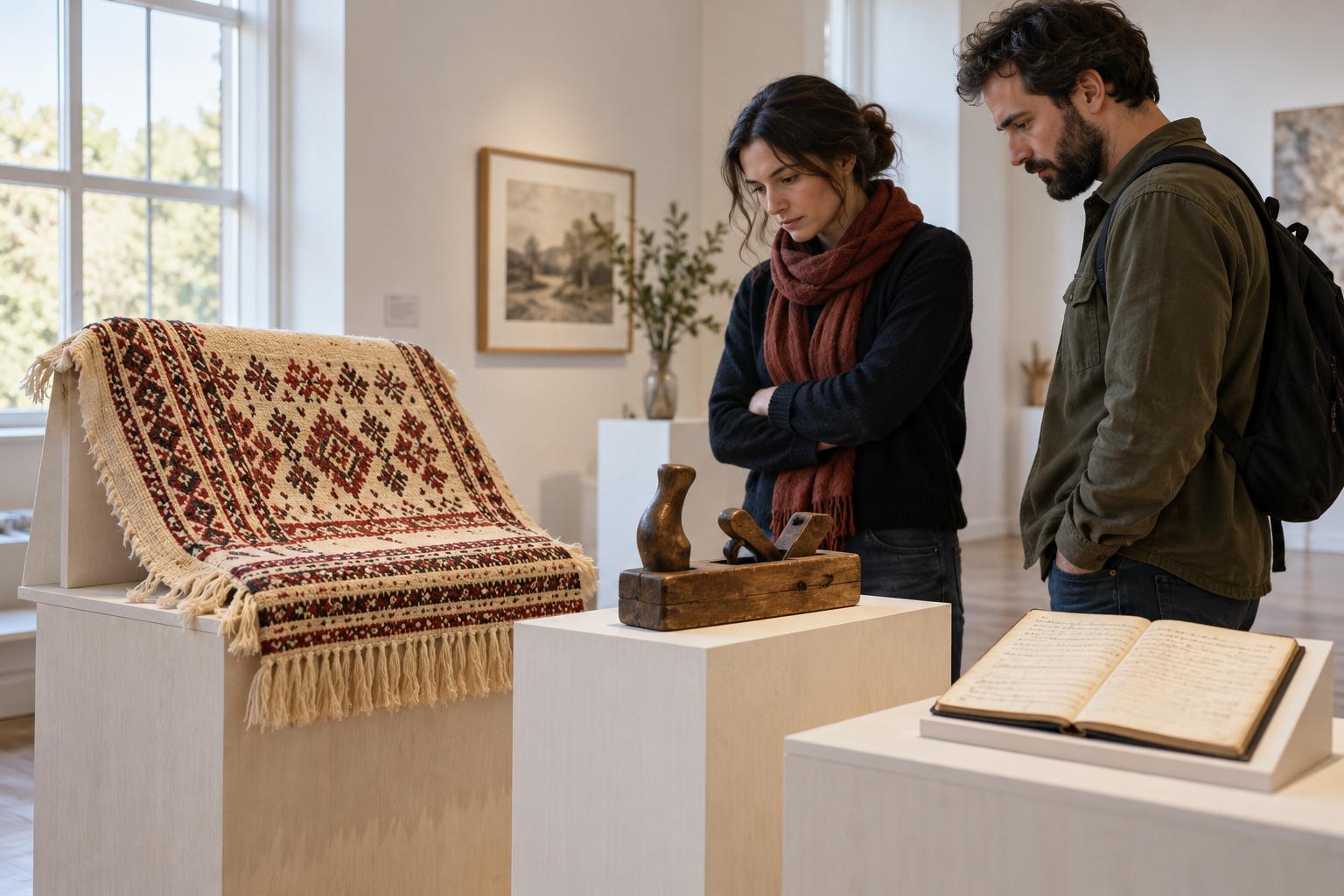
A community exhibition does not have to begin with expensive artworks or a large venue. Everyday objects can carry stories about work, family, creativity, and belonging. A handmade cloth, a well-used tool, or a carefully kept notebook may invite visitors to notice experiences they would otherwise overlook. The challenge is to present those objects clearly and care for them responsibly.
Give the exhibition a clear focus
Choose a theme narrow enough to guide decisions. Objects connected with family meals, learning a craft, or making a new home can form a coherent exhibition. Explain what you are seeking and let contributors decide whether their possessions fit the idea. Do not pressure someone to lend an item with special personal meaning.
Discuss practical arrangements before accepting loans. Record who owns each object, its condition, the agreed display period, and how it will be returned. Ask about handling, storage, and any restrictions on photography. If the organizers cannot provide appropriate care, consider displaying a photograph or a written account instead.
Keep the scale realistic. A small group of objects with thoughtful labels may be easier to understand than a crowded collection. Check the venue’s available space, access arrangements, and supervision. Assign a person responsible for receiving and returning items so contributors know whom to contact.
Write labels that connect without overclaiming
Ask the contributor to describe the object in their own words. Where did it come from? How was it used? Which memory makes it worth sharing? Select a brief account that answers a few of these questions while keeping the person’s meaning intact. Let them review the label before it is printed.
Separate known information from family recollection. An estimated date should remain approximate, and an uncertain place of origin should be described honestly. Avoid presenting a single object as representative of an entire country, religion, or community. Its particular story is often more useful than a broad claim.
Design the display so labels are easy to read and visitors can move comfortably. Position fragile or valuable objects where they cannot be handled casually. Explain photography rules clearly, including any restrictions that apply to individual items. Permission from a lender should be recorded rather than assumed.
Offer visitors a simple way to respond, such as a question card or a short conversation with a volunteer. Collect names only when there is a clear purpose and agreement. After the exhibition, return each item as arranged and thank contributors. Careful organization makes the display a shared creative project while protecting the trust that allowed it to happen.